|
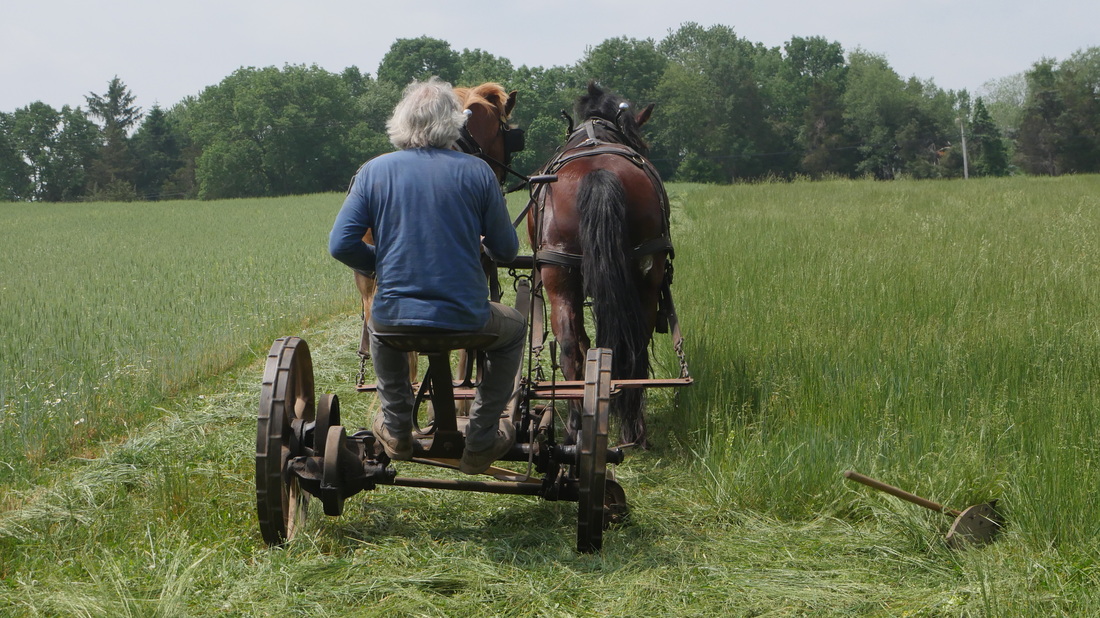
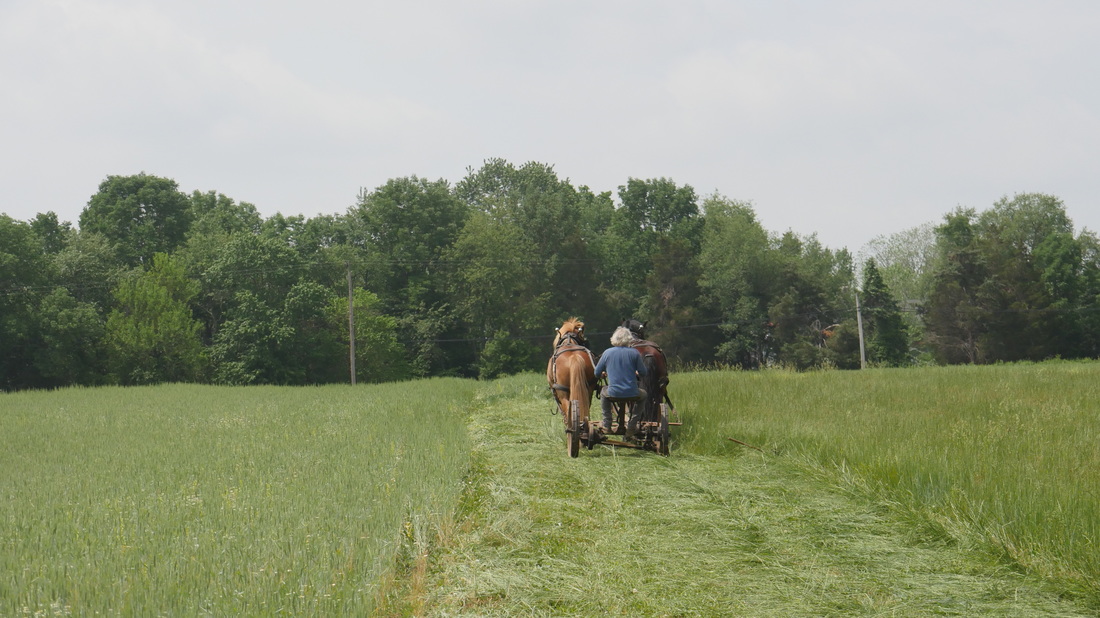
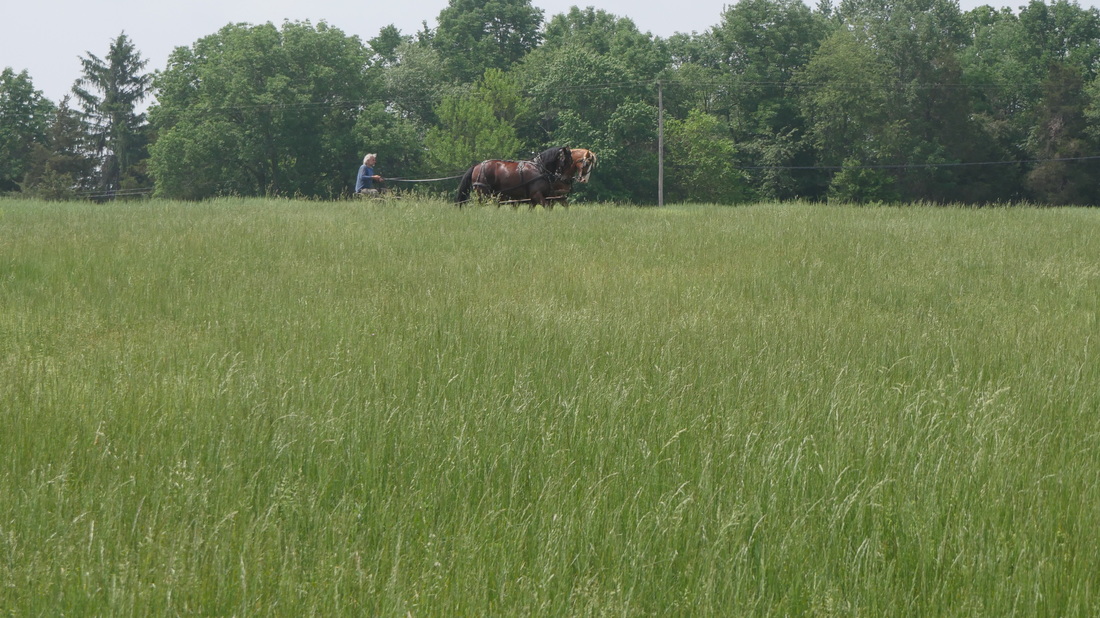
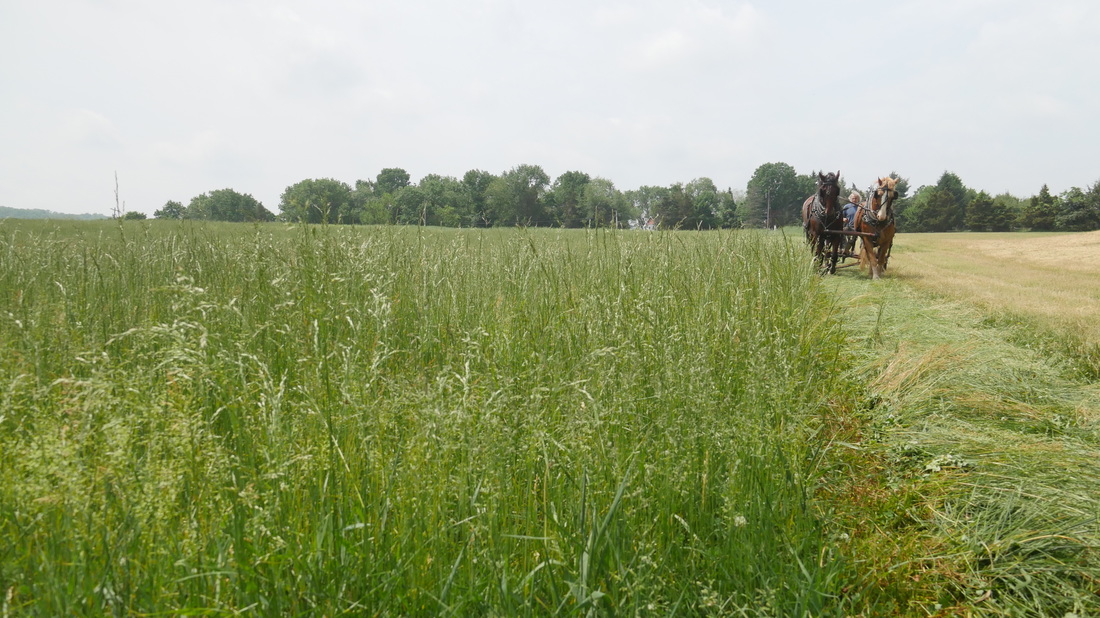
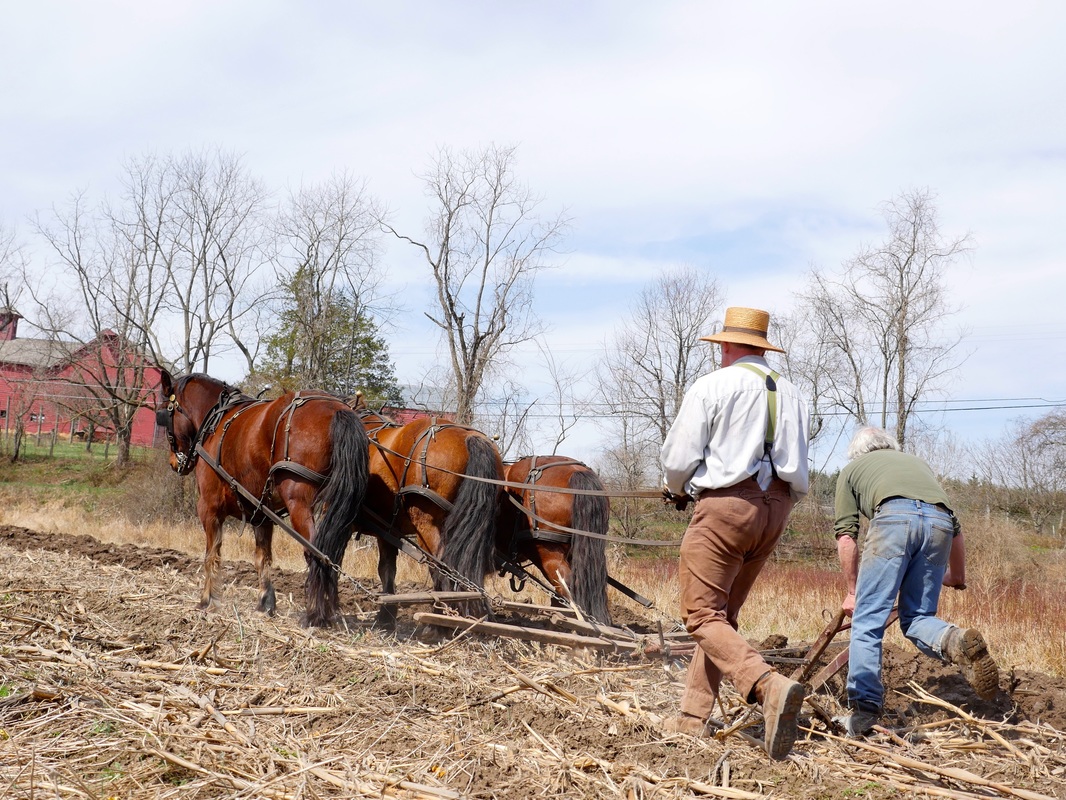
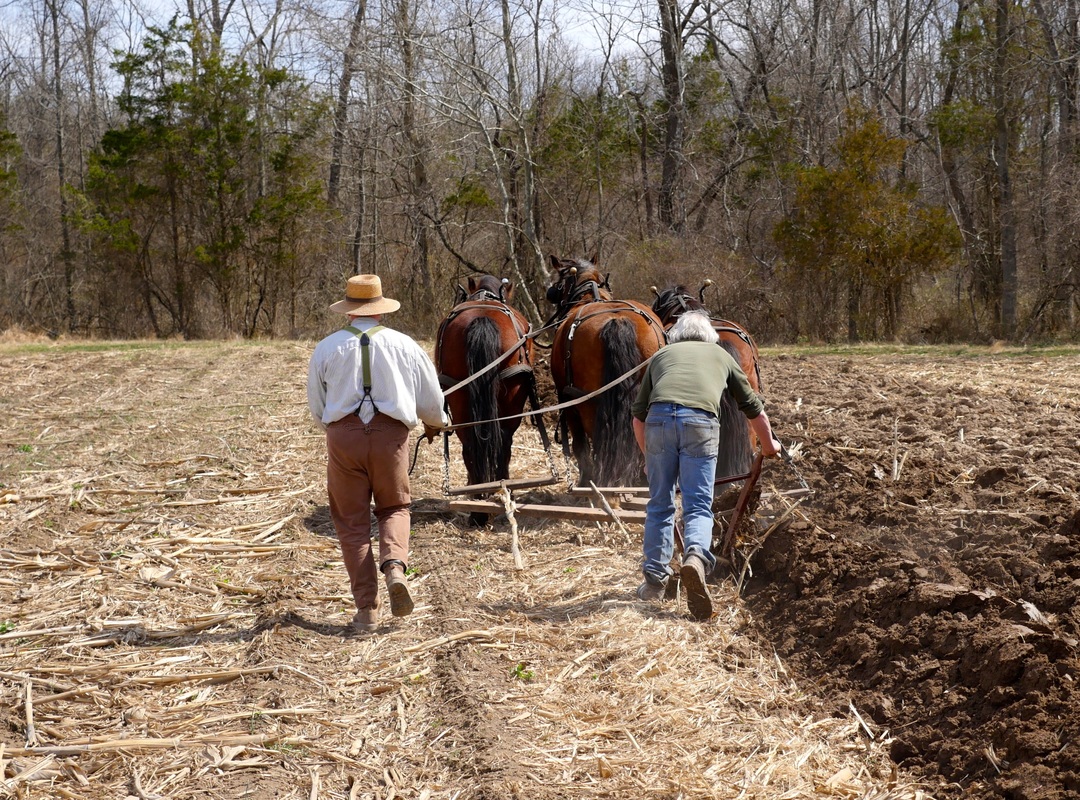
Over the past two days, Farmer Ian and the draft horses 'got in the oats,' as they say. Planting happened on Wednesday, and packing--going over the field with a roller--was finished just this morning. Now what the oats need is some rain. The spring to date hasn't had many good soaking rains. North Jersey and Eastern Pennsylvania are official "Abnormally Dry" according to the US Drought Monitor, and Mercer County will be soon if we don't get some showers.
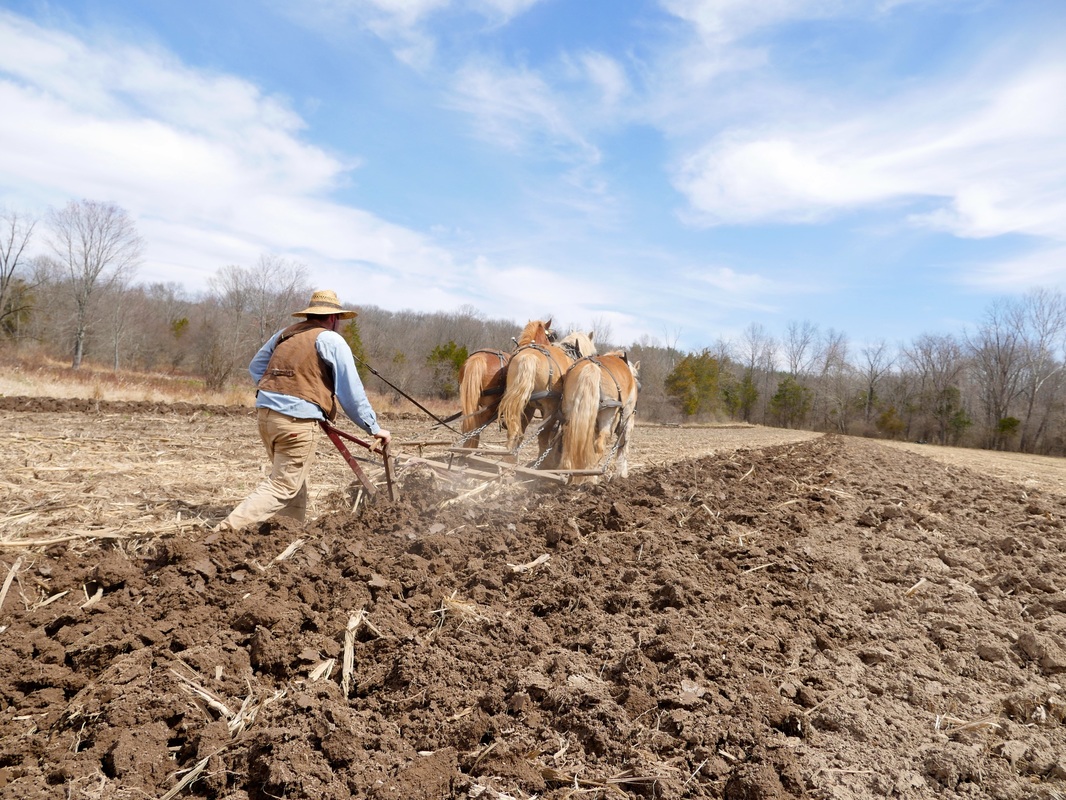
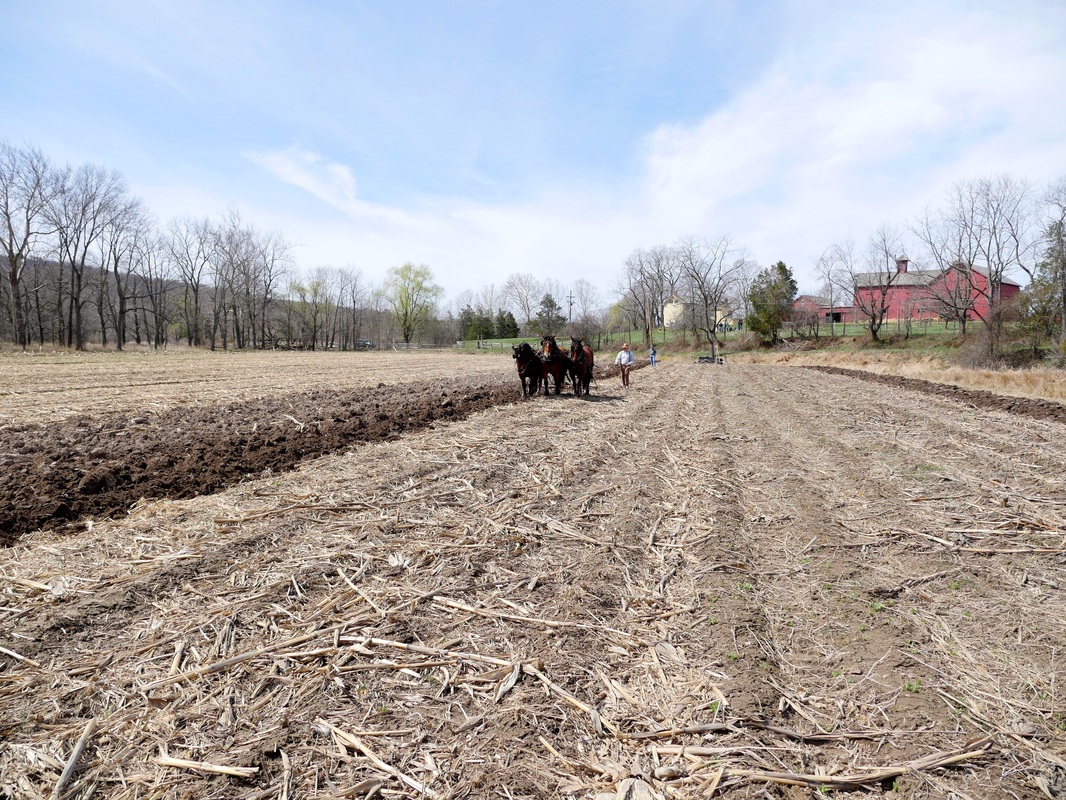
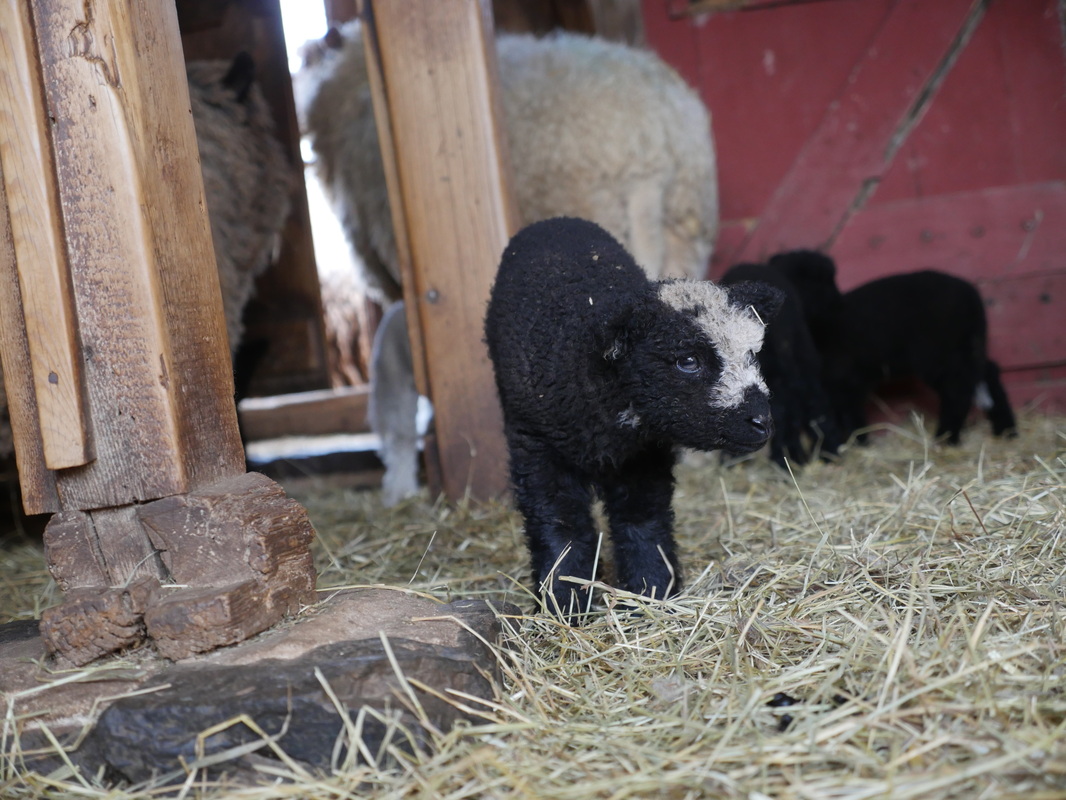
Planting photos by Jeff Kelly. Plowing season at Howell Farm has commenced. Following the traditional COWS rotation (corn, oats, wheat, sod), the farmers are plowing up last year's corn field to prepare for planting oats, the first crop of spring. The first few days of plowing are always challenging. Not only is the soil this year still a little wet (and thus heavy) but the horses and farmers haven't plowed since last fall--they're not quite in game shape. On the plus side, spring plowing is often completed on beautiful, warm-but-not-hot, sunshine-filled days such as today. 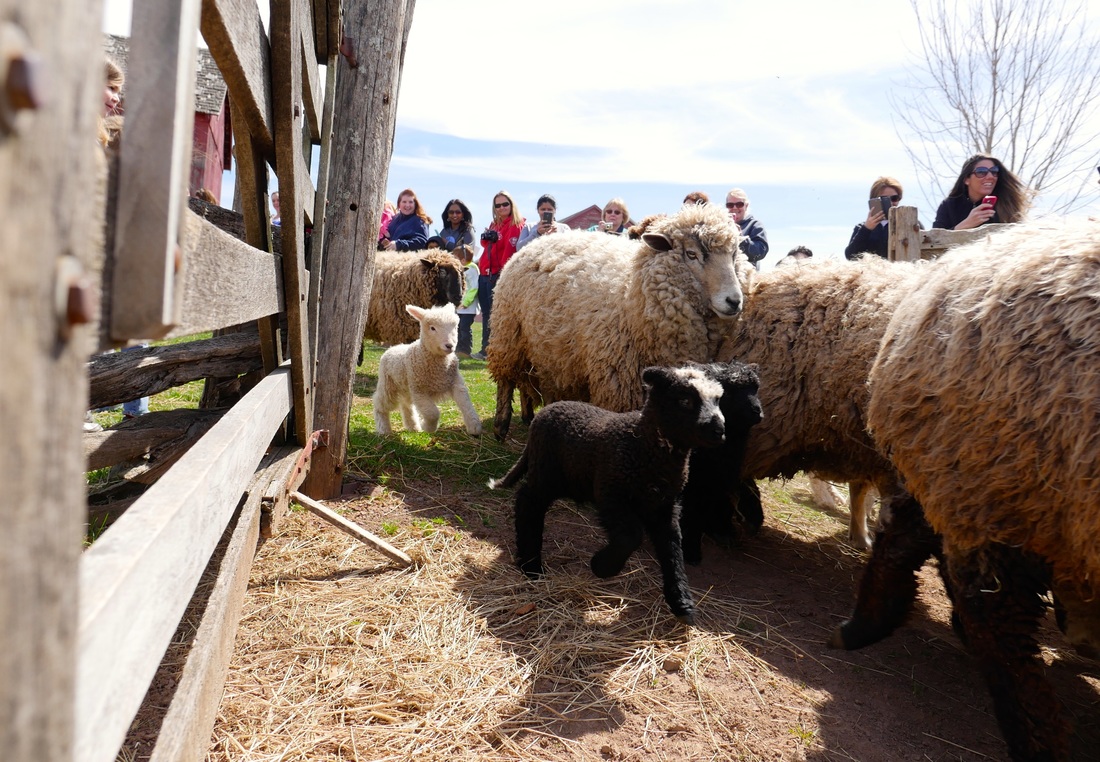 Visitors to Howell Farm help the sheep into the pasture by forming a human fence. Green grass awaits.
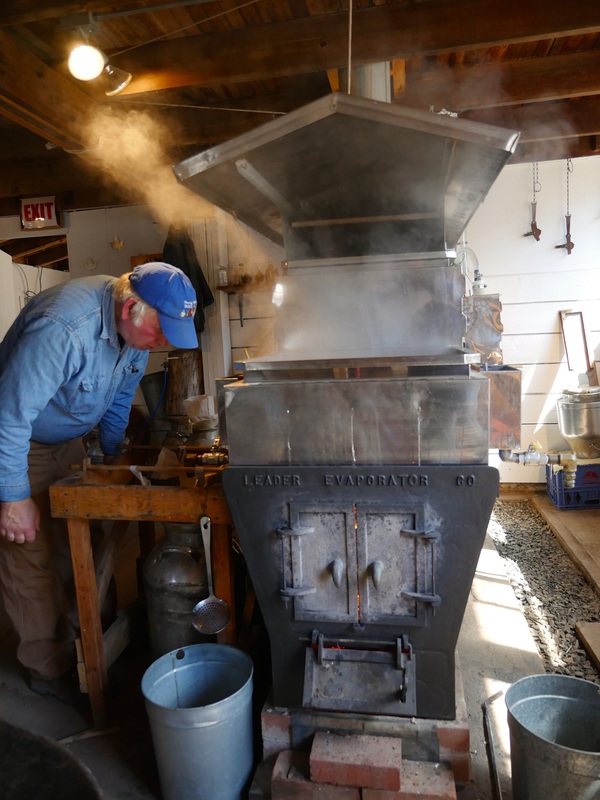
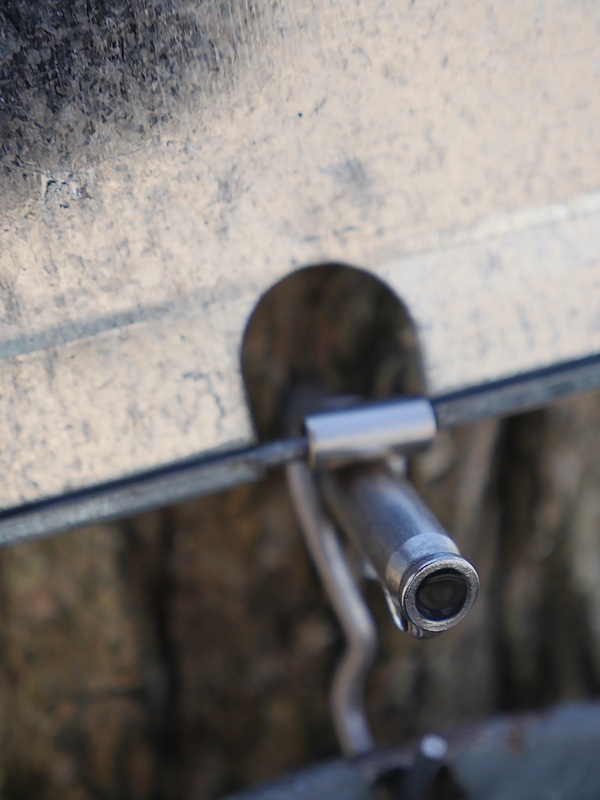
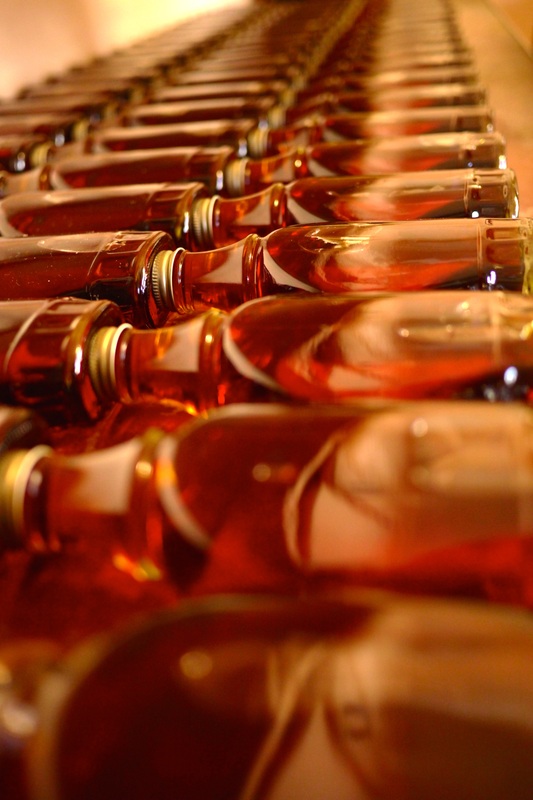 As the temperatures finally climb, maple syruping season at Howell Farm has reached its end.
Bottling Coordinator Danielle delivered the official spreadsheet to me, which details gallons of maple syrup produced, and bottles bottled, dating back to 2005. The grand total for 2015 was 84.88 gallons of maple syrup produced, resulting in 1,291 finished 8 oz. bottles, plus 4 gallons set aside for Howell Farm program activities. Farm Director Pete Watson and I both received these results with a certain sense of mixed regret. Nearly 85 gallons is a wonderful haul of syrup—it’s the second best year ever for Howell Farm, losing out only to last year’s record-setting triumph of 88 gallons. But to come so close to breaking the record—falling just 3 gallons short—leaves one with the sense of missing a fantastic opportunity at leaving a historic mark. Surely the 120 gallons of extra sap required to break the record (40 gallons of sap = 1 gallon of finished syrup) could have been squeezed out of the woodwork somewhere—a few more trees along a distant slope, or a few more tap holes, or an extra day or two of late season operations. ‘Bittersweet’ is the only word that comes to mind when summing up the emotions of missing the syruping record by the whisker of a barn cat. Farmer Jim (who heads the syruping operation) and the rest of us will regroup during the off-season by clinging to a thought that has brought a limited degree of comfort to second-place finishers throughout the ages: Well, there’s always next year. Once a week during maple syruping season, I stroll down to the Sugar Shack to get an update on syruping operations from Farmer Jim. He's been syruping in New Jersey for many years, and he says this is only the second year ever he's still been boiling sap in April. The first time was last year.
With the weather finally turning warmer, Jim thinks next week will be the last week for collecting sap. I also checked in with Syrup Finisher Danielle and she said this year is shaping up to be an average year in terms of production. It will fall short of last year's record setting haul, but will be much better than the worst years on record. |
About
The Furrow is the online newsletter of The Friends of Howell Living History Farm. We will be updating this site about once a week with crop reports and other insights into life on a horse-drawn living history farm. Archives
June 2015
|
| THE FURROW: The online newsletter of Howell Living History Farm |
|


 RSS Feed
